Analyzing the Factors Affecting Synergy Creation in Multidisciplinary Holding Companies
Keywords:
Synergy Enhancement, Multidisciplinary Holding Companies, DEMATEL, Analytic Network Process (ANP), Fuzzy ApproachAbstract
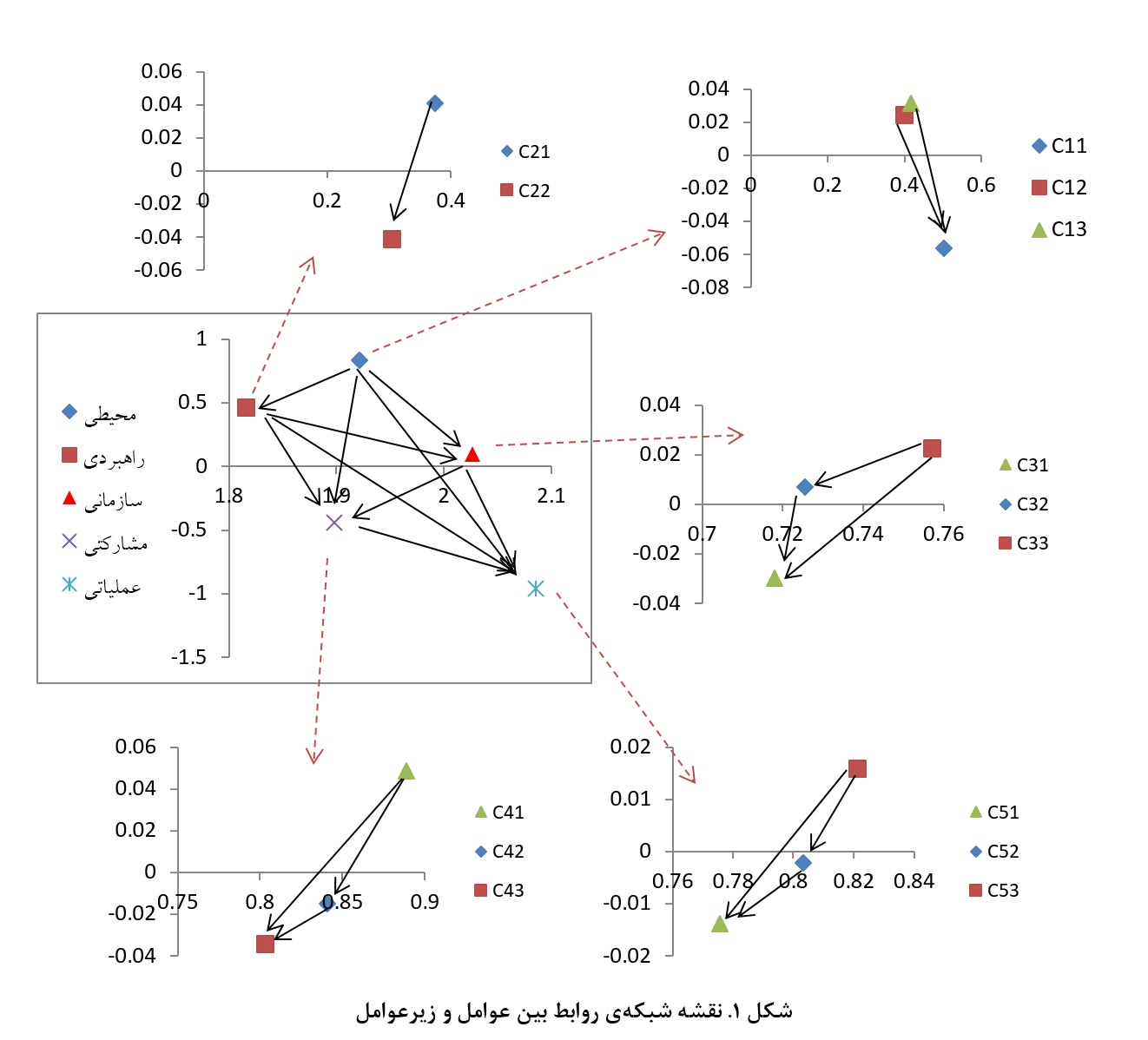
The present study aimed to identify and analyze the interrelationships among the factors influencing synergy enhancement in multidisciplinary holding companies to address the challenges associated with leveraging the potential capacities of subsidiary companies for greater value creation. In terms of its purpose, the study was both fundamental and applied, while methodologically, it employed a mixed qualitative–quantitative approach. The research participants consisted of 14 senior managers and experts from a holding investment company, who were selected through purposive non-probability sampling. The identification of the key factors, including environmental, strategic, organizational, collaborative, and operational factors, constituted the main finding of the qualitative phase, which was conducted through content analysis based on a systematic review of the theoretical literature and semi-structured interviews. Subsequently, the relationships among the factors, their influence and dependence, as well as their relative weights and priorities, were determined using a Fuzzy DEMATEL-based Analytic Network Process (ANP) through a pairwise comparison questionnaire. The results indicated that the environmental factor had the greatest influence and affected the strategic, organizational, collaborative, and operational factors, respectively. The prioritization results revealed that managers and decision-makers should prioritize enhancing supply chain synergy, followed by enhancing production and operational synergy, and enhancing market and sales synergy within holding companies. Achieving these objectives requires governmental legal, regulatory, and supportive measures. Furthermore, strategic alignment is essential for enhancing synergy among the companies within multidisciplinary holding structures.
References
Abbasi, A., Golard, P., & Hosseini Golafshani, S. A. (2025). A model of synergy between social capital and organizational learning using thematic analysis: The case of the National Iranian Oil Company. Quarterly Journal of Strategic Studies in the Oil and Energy Industry, 16(64), 159–178.
Abolhasani, M. T., Chirani, E., Mahfouzi, G., & Rahnama Rudposhti, F. (2026). Presenting an integrated model for the holding company governance system. Investment Knowledge, 15(60), 479–500.
Andrew, A., & Anggraini, A. M. T. (2022). Regulation of the synergy of holding company state-owned enterprises (BUMN) in the effort to contribute to the development of the national economy. International Journal of Law and Politics Studies, 4(2), 109–119.
Andriuškevičius, K., & Štreimikienė, D. (2022). Sustainability framework for assessment of mergers and acquisitions in energy sector. Energies, 15(13), 4557.
Azar, A., Sangi, M., Izadkhah, M. M., & Anvari, A. (2015). Presenting a fuzzy system for identifying synergy opportunities in parent companies. Information Technology Management, 7(1), 1–22.
Bauer, F., King, D. R., Friesl, M., Schriber, S., & Weng, Q. (2024). Acquisition integration capabilities and organizational design. Long Range Planning, 57(6), 102479.
Chaturvedi, T., & Weigelt, C. (2024). Operating synergy and post-acquisition integration in corporate acquisitions: A resource reconfiguration perspective. Long Range Planning, 57(3), 102428.
Chesbrough, H. W. (2003). Open innovation: The new imperative for creating and profiting from technology. Harvard Business School Press.
Chrysikopoulos, S. K., Chountalas, P. T., Georgakellos, D. A., & Lagodimos, A. G. (2024). Modeling critical success factors for industrial symbiosis. Eng, 5(4), 2902–2919.
Čirjevskis, A. (2023). Predicting explicit and valuing tacit synergies of high-tech based transactions: Amazon.com’s acquisition of Dubai-based Souq.com. Journal of Risk and Financial Management, 16(2), 123.
Dau, L. A., Morck, R., & Yeung, B. Y. (2021). Business groups and the study of international business: A Coasean synthesis and extension. Journal of International Business Studies, 52(2), 161–211.
Doucet, P., Maicas, J. P., & Fuentelsaz, L. (2026). Decoding corporate influence: How immediate parents shape subsidiary performance in diversified and hierarchical groups. Long Range Planning, 102657.
Eisazadeh-Lazarjani, H., Saeidi, P., Bokharaeian-Khorasani, M., Gorganli-Doji, & Jamadverdi. (2024). Identifying the factors and model of financial synergy through the Iranian banking industry. Human Capital Empowerment, 26(7), 22–41.
Feldman, E. R. (2021). The corporate parenting advantage, revisited. Strategic Management Journal, 42(1), 114–143.
Garzella, S., & Fiorentino, R. (2016). M&A success and failure: The role of synergy management. In Synergy value and strategic management: Inside the black box of mergers and acquisitions (pp. 9–34). Springer International Publishing.
Goold, M., & Campbell, A. (2002). Parenting in complex structures. Long Range Planning, 35(3), 219–243.
Grisanto, R. G. S., Wiryono, S. K., & Sunitiyoso, Y. (2025). Key drivers for successful integration of Indonesian state-owned holding: A soft systems methodology approach. Cogent Business & Management, 12(1), 2483378.
Gu, P., Yu, J., Zhou, X., & Ju, H. (2025). A shared value network model based on synergy theory in intelligent manufacturing. Heliyon, 11(2).
Hitt, M. A., Ireland, R. D., & Hoskisson, R. E. (2023). Strategic management: Competitiveness and globalization: Concepts and cases (15th ed.). Cengage Learning.
Holubčík, M., Soviar, J., & Lendel, V. (2023). Through synergy in cooperation towards sustainable business strategy management. Sustainability, 15(1), 525.
Hosseini, S. R., Mohammadi Fallah, M. P., Bagherlu, M., & Mahmudian, T. (2014). Holding companies’ strategies and their distinction from large organizations, investment, trust and merger. European Online Journal of Natural and Social Sciences: Proceedings, 2(3S), 2928.
Jin, J. L., & Wang, L. (2021). Resource complementarity, partner differences, and international joint venture performance. Journal of Business Research, 130, 232–246.
Kalsie, A., & Singh, N. (2026). Merger and acquisition and synergy: A meta-regression analysis. Business Analyst Journal, 1–19.
Karimi Shirazi, K., & Vakil Alroaia, Y. (2024). Identification of the challenges of using the technology of Industry 4.0 in the circular supply chain of sustainable agriculture. Journal of Public Service Marketing, 2(5), 19–35.
Khashei Varnamkhasti, V., Dehghanan, H., Khalilnejad, S., & Shahbazi, P. (2026). Factors affecting the competencies of strategy-oriented holdings in the petrochemical industry. Management, Education and Development in the Digital Age, 1–17.
Khojasteh, M., Esmaeilzadeh Ghandahari, M., Fahim Devin, H., & Peymanizad, H. (2021). Analysis of the dimensions of managerial performance synergy in the development and empowerment of sports federations. Sport Management, 13(1), 277–292.
Kovacova, M., Kalinova, E., Durana, P., & Frajtova Michalikova, K. (2024). Synergy of modern analytics and innovative managerial decision-making in the turbulent and uncertain new normal. Forecasting, 6(4), 1001–1025.
Kreuter, T., Scavarda, L. F., Thomé, A. M. T., Hellingrath, B., & Seeling, M. X. (2022). Empirical and theoretical perspectives in sales and operations planning. Review of Managerial Science, 16(2), 319–354.
Larsson, R., & Finkelstein, S. (1999). Integrating strategic, organizational, and human resource perspectives on mergers and acquisitions: A case survey of synergy realization. Organization Science, 10(1), 1–26.
Lassala, C., Orero-Blat, M., & Ribeiro-Navarrete, S. (2021). The financial performance of listed companies in pursuit of the Sustainable Development Goals (SDG). Economic Research-Ekonomska Istraživanja, 34(1), 427–449.
Lee, K., Oh, F. D., Shin, D., & Yoon, H. (2024). Innovation spillovers within business groups: Evidence from Korean chaebols. Emerging Markets Review, 60, 101151.
Li, S., Huo, B., & Han, Z. (2022). A literature review towards theories and conceptual models of empirical studies on supply chain integration and performance. International Journal of Production Economics, 250, 108625.
Mashudi, A., Moeljadi, S., & Suryokumoro, H. (2021). Optimization of synergy research and development institutions and universities towards an independent national defense industry. International Journal of Progressive Sciences and Technologies, 27(2), 372–381.
Molla, E., Kheirandish, M., Taghipourian, M. J., & Kia Kajouri, D. (2024). Identifying the factors of a synergistic work-team model in Iranian public organizations using the meta-synthesis method. Management of Governmental Organizations, 12(4), 37–54.
OECD. (2020). Duties and responsibilities of boards in company groups. https://doi.org/10.1787/859ec8fe-en
Oira, S. M., Omagwa, J., & Abdul, F. (2023). The relationship between operational synergy and firm performance: A review of literature. Journal of Finance and Accounting, 7(5), 95–112.
Pongpeng, J., & Ratanawimol, N. (2024). A common structure for factors that enhance synergy in contractor project teams: Executive and practitioner perspectives. Buildings, 14(9), 2754.
Rahimi, B., Jahangirfard, M., & Haj Alian, F. (2023). Investigating and ranking the variables and components of the impact of institutionalizing organizational culture on synergy in the Tourism Holding Company and Parsian Hotel Group using the AHP method. Quarterly Journal of Management Studies and Sustainable Development, 3(3), 191–216.
Rezaei, N., Khodamoradi, S., & Safari, S. (2021). Presenting a model for identifying and determining horizontal cooperation clusters in industrial holdings. Research in Production and Operations Management, 12(2), 25–45.
Rostaminia, A., & Haghighi Kafash, M. (2025). Identifying factors affecting managerial synergy in holding companies of Iran’s oil industry. Strategic Studies in the Oil and Energy Industry, 17(67), 1–22.
Schmidt, J., Makadok, R., & Keil, T. (2016). Customer-specific synergies and market convergence. Strategic Management Journal, 37(9), 2003–2007.
Sengul, M., & Workiewicz, M. (2026). Comanaging in multisubsidiary firms: The role of complementary and substitutive interdependencies. Organization Science, 37(3), 1123–1144.
Shijaku, E., Lou, B., & Bauer, F. (2025). Exploring synergies in business restructuring: A dynamic framework. Business Horizons, 69(2), 179–196.
Siskos, I., & Van Wassenhove, L. N. (2017). Synergy management services companies: A new business model for industrial park operators. Journal of Industrial Ecology, 21(4), 802–814.
Tu, X., & Chen, H. (2025). Evolutionary game analysis of strategic organizational knowledge synergy in collaborative innovation. Scientific Reports, 16, 345. https://doi.org/10.1038/s41598-025-29700-0
Vinayavekhin, S., & Phaal, R. (2020). Improving synergy in strategic planning: Enablers and synchronization assessment framework (SAF). International Journal of Innovation and Technology Management, 17(2), 2050009.
Wu, S., Huang, D., Li, J., & Xiao, J. (2026). Innovative resource synergy, market integration, and new quality productive forces: Testing based on threshold and moderating effects. Future Business Journal, 12(1), 45.
Xiong, G., Wang, L., Rong, D., & Li, J. (2026). Leveraging digital transformation: Enhancing subsidiary performance through parent company advantages. Sustainability, 18(7), 3172.
Yu, P., Zhao, X., & Yang, J. (2026). From trade-offs to strategic synergy: How digitalization–greenization synergy drives innovation efficiency in manufacturing. Journal of Manufacturing Technology Management, 1–24.
Zheng, W. Q., Cheung, S. M., Zhu, B. W., Xiong, L., & Tzeng, G. H. (2024). A hybrid multi-attribute decision-making model for the systematic evaluation of exoticism-themed retail spaces from the perspective of consumer experience. Journal of Retailing and Consumer Services, 79, 103848.
Zhu, J., Gao, H., & Wang, J. (2021). Analysis of synergy degree and its influencing factors in hydropower EPC project management. Frontiers of Engineering Management, 8(3), 402–411.
Downloads
Publication Timeline
- Submitted
- Revised
- Accepted
Issue
Section
License
Copyright (c) 2025 علی حسینی (نویسنده); سینا خردیار (نویسنده مسئول); فاطمه صمدی, محمد ابراهیم راعی عزآبادی , هادی سیدفضلی (نویسنده)

This work is licensed under a Creative Commons Attribution-NonCommercial 4.0 International License.