Identification and Prioritization of Supply Chain Management Challenges in the uPVC Window Industry Using an Integrated Fuzzy SWARA–WASPAS Approach
Keywords:
supply chain, challenges, multi-criteria decision-making techniques, uncertain environment, fuzzy SWARA, fuzzy WASPASAbstract
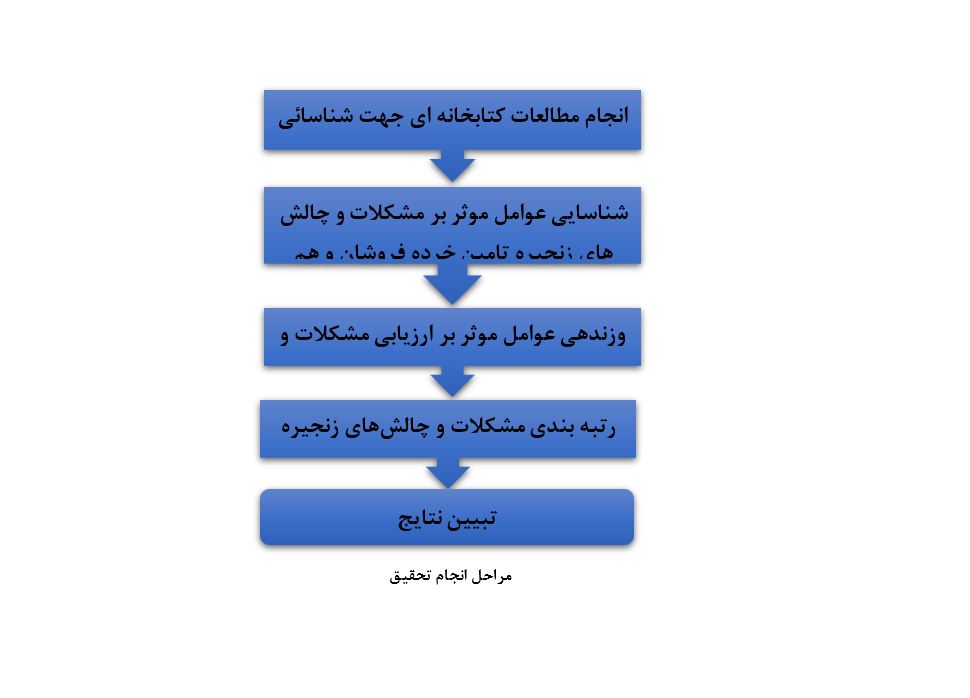
Supply chain management in manufacturing industries, particularly the construction industry and its related products, such as uPVC windows, faces numerous challenges. Owing to market dynamics and the qualitative nature of the relevant variables, these challenges are often characterized by ambiguity and uncertainty. This study aimed to identify, screen, and prioritize the key challenges and problems associated with supply chain management in the uPVC window industry. For this purpose, following a comprehensive review of the research literature and consultation with industry experts, the identified challenges were classified into six overarching evaluation criteria. In the first stage, the main criteria were weighted using the fuzzy Step-wise Weight Assessment Ratio Analysis (SWARA) method. Subsequently, the 20 identified challenges were ranked using the fuzzy Weighted Aggregated Sum Product Assessment (WASPAS) method. The findings indicate that, among the evaluation criteria, “resistance to change and adaptation to innovation” has the highest level of importance. Furthermore, according to the results of the fuzzy WASPAS model, “lack of market demand” was identified as the most important and critical challenge facing the uPVC window supply chain. The results of this study can assist managers and decision-makers in this industry in optimizing resource allocation and mitigating operational risks.
References
Akkerman, R., Buisman, M., Cruijssen, F., de Leeuw, S., & Haijema, R. (2023). Dealing with donations: Supply chain management challenges for food banks. International Journal of Production Economics, 262, 108926.
Amid, A., Ghodsypour, S. H., & O’Brien, C. (2011). A weighted max–min model for fuzzy multi-objective supplier selection in a supply chain. International Journal of Production Economics, 131(1), 139-145.
Andreassen, T. W., Lervik-Olsen, L., Snyder, H., Van Riel, A. C., Sweeney, J. C., & Van Vaerenbergh, Y. (2018). Business model innovation and value-creation: the triadic way. Journal of service management, 29(5), 883-906.
Banihashemi, S. A., Khalilzadeh, M., Antucheviciene, J., & Edalatpanah, S. A. (2023). Identifying and prioritizing the challenges and obstacles of the green supply chain management in the construction industry using the fuzzy BWM method. Buildings, 13(1), 38.
Chen, A., Peng, N., & Hung, K. P. (2015). Managing salespeople strategically when promoting new products–incorporating market orientation into a sales management control framework. Industrial Marketing Management, 51, 141-149.
De Boer, L., Labro, E., & Morlacchi, P. (2001). A review of methods supporting supplier selection. European journal of purchasing & supply management, 7(2), 75-89.
Ghodsypour, S. H., & O'brien, C. (1998). A decision support system for supplier selection using an integrated analytic hierarchy process and linear programming. International journal of production economics, 56, 199-212.
Haleh, H., & Hamidi, A. (2011). A fuzzy MCDM model for allocating orders to suppliers in a supply chain under uncertainty over a multi-period time horizon. Expert Systems with Applications, 38(8), 9076-9083.
Ho, W., Xu, X., & Dey, P. K. (2010). Multi-criteria decision making approaches for supplier evaluation and selection: A literature review. European Journal of operational research, 202(1), 16-24.
Itani, O. S., Agnihotri, R., & Dingus, R. (2017). Social media use in B2b sales and its impact on competitive intelligence collection and adaptive selling: Examining the role of learning orientation as an enabler. Industrial Marketing Management, 66, 64-79.
Karpak, B., Kumcu, E., & Kasuganti, R. (1999). An application of visual interactive goal programming: a case in vendor selection decisions. Journal of Multi‐Criteria Decision Analysis, 8(2), 93-105.
KIM, Y. E., & YANG, H. C. (2020). The effects of perceived satisfaction level of high-involvement product choice attribute of millennial generation on repurchase intention: Moderating effect of gender difference. The Journal of Asian Finance, Economics and Business, 7(1), 131-140.
Luthra, S., Kumar, V., Kumar, S., & Haleem, A. (2011). Barriers to implement green supply chain management in automobile industry using interpretive structural modeling technique: An Indian perspective. Journal of Industrial Engineering and Management (JIEM), 4(2), 231-257.
Menon, R. R., & Ravi, V. (2021). Analysis of barriers of sustainable supply chain management in electronics industry: An interpretive structural modelling approach. Cleaner and Responsible Consumption, 3, 100026.
Mudgal, R. K., Shankar, R., Talib, P., & Raj, T. (2010). Modelling the barriers of green supply chain practices: an Indian perspective. International Journal of Logistics Systems and Management, 7(1), 81-107.
Odimarha, A. C., Ayodeji, S. A., & Abaku, E. A. (2024). The role of technology in supply chain risk management: Innovations and challenges in logistics. Magna Scientia Advanced Research and Reviews, 10(2), 138-145.
Rodríguez, R., Svensson, G., & Mehl, E. J. (2020). Digitalization process of complex B2B sales processes–Enablers and obstacles. Technology in Society, 62, 101324.
Shaw, K., Shankar, R., Yadav, S. S., & Thakur, L. S. (2012). Supplier selection using fuzzy AHP and fuzzy multi-objective linear programming for developing low carbon supply chain. Expert systems with applications, 39(9), 8182-8192.
Young, K., Brown, B. P., & Milne, G. R. (2019). Identifying Barriers to Internet Sales Development: A Mixed Research Approach. Industrial Marketing Management, 43(5), 873-881.
Downloads
Publication Timeline
- Submitted
- Revised
- Accepted
Issue
Section
License
Copyright (c) 2025 محمد اخشابی (نویسنده)

This work is licensed under a Creative Commons Attribution-NonCommercial 4.0 International License.