ارزیابی استراتژیهای حرکت به سمت زنجیره تامین هوشمند و پایدار در صنعت لوازم خانگی
کلمات کلیدی:
مدیریت زنجیره تامین, زنجیره تامین هوشمند, زنجیره تامین پایدار, صنعت لوازم خانگیچکیده
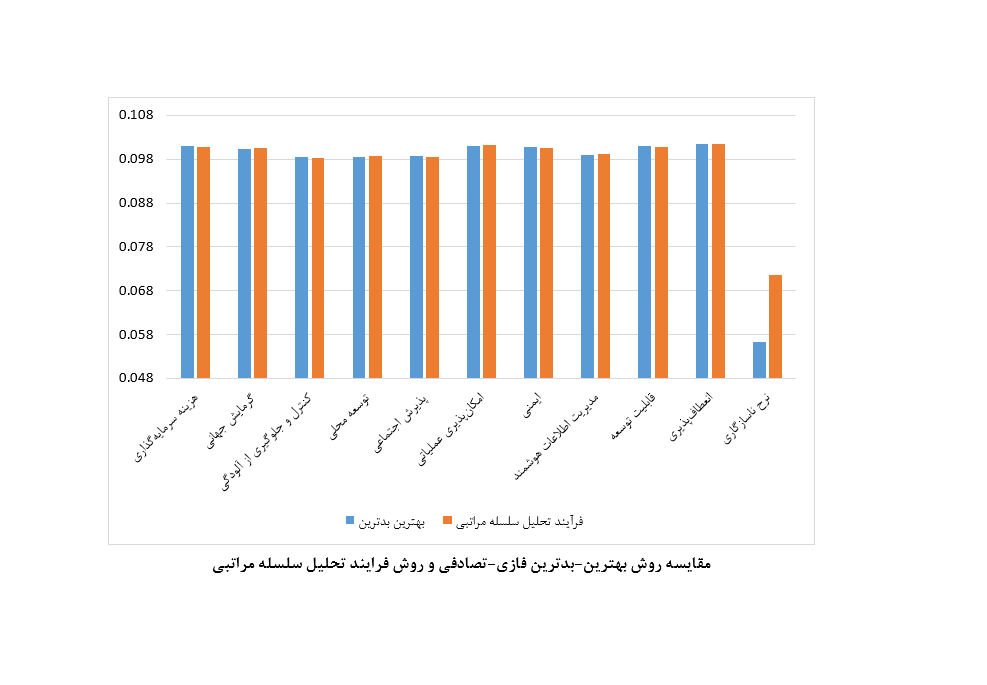
در دنیای رقابتی امروز، یکپارچهسازی اهداف هوشمندسازی (مانند استفاده از اینترنت اشیاء و هوش مصنوعی) و پایداری (زیستمحیطی، اجتماعی، اقتصادی) برای دستیابی به مزیت رقابتی پایدار امری ضروری است. ادبیات تحقیق نشان میدهد که پژوهشهای پیشین اغلب به صورت مجزا به این ابعاد پرداخته و یا شکافهای روششناختی قابل توجهی در تحلیل عدم قطعیتها و اولویتبندی استراتژیها نشان دادهاند. در این زمینه، این پژوهش به شناسایی و ارزیابی استراتژیهای کلیدی در جهت حرکت به سمت یک زنجیره تأمین هوشمند و پایدار در صنعت لوازم خانگی میپردازد. این تحقیق مجموعهای از استراتژیها و معیارهای مؤثر را با استفاده از روشهای تصمیمگیری چندمعیاره فازی–تصادفی شناسایی و ارزیابی میکند. ابتدا، با بهکارگیری روش بهترین-بدترین فازی-تصادفی، معیارهای اصلی مساله تحقیق وزندهی شدهاند. سپس، با استفاده از روش کوپراس فازی-تصادفی، استراتژیهای شناسایی شده بر اساس سناریوهای مختلف عدم قطعیت (بدبینانه، محتمل، خوشبینانه) رتبهبندی شدهاند. در این پژوهش، دادههای مورد نیاز از طریق نظرسنجی از 5 گروه از خبرگان دارای تخصص در حوزه مرتبط با این تحقیق گردآوری شد. مطالعه حاضر بهصورت موردی در صنعت لوازم خانگی انجام شدهاست. نتایج نشان میدهد معیارهای انعطافپذیری، امکانپذیری عملیاتی، هزینه سرمایهگذاری، ایمنی، قابلیت توسعه و گرمایش جهانی به عنوان مهمترین موارد انتخاب شدند. همچنین، بر اساس نتایج به دست آمده، استراتژیهای اقتصاد چرخشی هوشمند و استفاده از تکنولوژیهای پیشرفته در فرآیند تولید به عنوان موارد برتر انتخاب شدهاند. این یافتهها بینشهای مدیریتی ارزشمندی را برای مدیران فراهم میآورد تا بتوانند منابع خود را به طور مؤثرتری تخصیص داده و تصمیمات استراتژیک آگاهانهتری در راستای دستیابی به اهداف هوشمندسازی و پایداری اتخاذ نمایند.
مراجع
[1] Dağdeviren, I. E., & Erturgut, R. (2024). The mediating role of supply chain integration in the relationship between supply chain strategy and logistics performance. Sustainability, 16(21), 9514.
[2] Chowdhury, A. Y., & Islam, N. (2021). Supply chain management and operational performance: a critical evaluation of available literatures. Int J Appl Bus Manag Sci, 2, 233-51.
[3] Jahed, M. A., Quaddus, M., Suresh, N. C., Salam, M. A., & Khan, E. A. (2022). Direct and indirect influences of supply chain management practices on competitive advantage in fast fashion manufacturing industry. Journal of Manufacturing Technology Management, 33(3), 598-617.
[4] Fallahi, A., Pourghazi, A., & Mokhtari, H. (2024). A multi-product humanitarian supply chain network design problem: a fuzzy multi-objective and robust optimization approach.
[5] Abdan, E. B. K., & Çetindaş, A. (2023). The Impact of Supply Chain Strategies on Logistics Performance: A Study in the Post Covid-19 Pandemic Period. Gaziantep Üniversitesi Sosyal Bilimler Dergisi, 22(4), 1380-1393.
[6] Koçak, A. B., Almarestani, A., & Tirkolaee, E. B. (2025). A decision-making approach to establish a sustainable-circular waste management system: a case study of istinye university. Spectrum of Mechanical Engineering and Operational Research, 2(1), 204-218.
[7] Ada, E., Sezer, M., Kazançoğlu, Y., & Khaleel, R. (2023). Towards the smart sustainable and circular food supply chains through digital technologies. International Journal of Mathematical, Engineering and Management Sciences, 8(3).
[8] Zhang, G., Yang, Y., & Yang, G. (2023). Smart supply chain management in Industry 4.0: the review, research agenda and strategies in North America. Annals of operations research, 322(2), 1075-1117.
[9] Arora, M., Kumar, R., & Arora, Y. Sustainable Supply Chain Management through Smart Technology. In A Circular Economy for Manufacturing Waste Management (pp. 195-210). River Publishers.
[10] Wu, K., Tavasszy, L., Rezaei, J., & De Schutter, B. (2025). Game-theoretic models for sustainable supply chains with asymmetric information: a review. International Journal of Systems Science: Operations & Logistics, 12(1), 2520619.
[11] Alkaraan, F., Elmarzouky, M., de Sousa Jabbour, A. B. L., Jabbour, C. J. C., & Gulko, N. (2025). Maximising sustainable performance: Integrating servitisation innovation into green sustainable supply chain management under the influence of governance and Industry 4.0. Journal of Business Research, 186, 115029.
[12] Wahyudi, A., Sujianto, S., Wulandari, S., Mardiharini, M., Ardana, I. K., Indrawanto, C., ... & Yusuf, E. S. (2026). Enhancing flexibility in sustainable supply chains: strategies for Indonesian premium coffee. Cogent Business & Management, 13(1), 2606471.
[13] Utama, D. M., Amallynda, I., Wardana, R. W., Rosiani, T. Y., Anggriani, R., & Wijaya, D. S. (2026). A new hybrid fuzzy decision model for barrier identification and strategy prioritization in circular rice supply chains: A case study in Indonesia. Indonesian Journal of Science and Technology, 11(2), 293-320.
[14] Salehi, A., Babaei, A., & Hamidi, H. (2026). AI-Driven Strategies for Supply Chain Resilience: A Review of Challenges and Solutions During Pandemics. Int. J. Eng, 39(3), 585-605.
[15] Kamruzzaman, M., Karmakar, A., & Kibria, M. G. (2025). A hybrid framework for prioritizing the solutions to mitigate sustainable supply chain barriers in industry 5.0. Cleaner Logistics and Supply Chain, 100268.
[16] Nayeri, S., Sazvar, Z., & Tirkolaee, E. B. (2025). Towards waste management 5.0: A nexus between circular economy and industry 5.0 dimensions. Waste Management, 203, 114830.
[17] Kolashlou, H. J., & Eshghi, F. (2025). Multi-Criteria Decision-Making Framework for Sustainable Energy Scheduling and Demand Response Strategies in Smart Grids: An Economic, Environmental, and Technical Perspective. International journal of sustainable applied science and engineering, 2(2), 53-65.
[18] Raj, R., Kumar, V., Mittal, A., Verma, P., Lai, K. K., & Singh, A. (2025). Practices and strategies for global sourcing and supply chain management: a Pareto analysis and MOORA a mixed method approach. Journal of Global Operations and Strategic Sourcing, 18(3), 447-470.
[19] Eftekhari, Y., Paydar, M. M., & Nayeri, S. (2026). Towards a Circular Economy-Based Viable Agricultural Waste Management: a Hybrid Fuzzy Decision Framework. Process Integration and Optimization for Sustainability, 1-22.
[20] Görçün, Ö. F., Mishra, A. R., Aytekin, A., Simic, V., & Korucuk, S. (2024). Evaluation of Industry 4.0 strategies for digital transformation in the automotive manufacturing industry using an integrated fuzzy decision-making model. Journal of Manufacturing Systems, 74, 922-948.
[21] Baj-Rogowska, A., & Nozari, H. (2024). Multi objective Machine Learning for Real-Time Decision Making in Smart Supply Chains. Journal of Business and Future Economy, 1(3), 47-62.
[22] An, J., Li, S., Qiao, J., & Yang, Q. (2026). The impact of smart supply chain management on supply chain transparency: a dynamic resource-based view. Operations Management Research, 19(1), 1-24.
[23] Morshedi, M., Hargaden, V., Papakostas, N., & Ghadimi, P. (2026). The Adoption of Digital Technologies in Circular Supply Chains: From Theoretical Developments to Practical Applications. Logistics, 10(1), 18.
[24] Chehreh, S., Rezaei, M., & Salmasnia, A. (2026). Optimization of a Virtual Sustainable Closed-Loop Supply Chain Based on the Internet of Things and Blockchain under Uncertainty.
[25] Barathi, G., Murugesan, R., & Murugesan, S. (2025). Analysing the drivers for implementing smart supply chain management in Indian industries by using the analytic hierarchy process. The International Journal of Advanced Manufacturing Technology, 1-16.
[26] Firouzian-Haji, S., Eshghollahi, S. E., Ziari, M., Tavakkoli-Moghaddam, R., & Rezaei, P. (2025). A blockchain-based approach to enhance transparency and sustainability in a joint pricing and closed-loop supply chain network design problem. Journal of Environmental Management, 394, 127463.
[27] Cortés-Pellicer, P., Alarcón, F., & Pérez-Perales, D. (2025). A system dynamics model for improving the reverse supply chain using the IoT in the household appliances sector. Annals of Operations Research, 1-29.
[28] Yousefi, S., Khodoomi, M. R., & Tosarkani, B. M. (2025). Data-driven robust strategic sourcing considering supply-side competition: Insights into blockchain adoption for coordination. Transportation Research Part E: Logistics and Transportation Review, 197, 103977.
[29] Khan, S., Qazi, A., Siddiqui, M. S., & Singh, R. (2025). Decoding the causal relationship of IoT barriers adoption in closed-loop supply chains: an ISM-DEMATEL-fuzzy MICMAC approach. International Journal of Management Science and Engineering Management, 1-17.
[30] Li, C. (2025). Internet of Things (IoT) Driven Logistics Supply Chain Management Coordinated Response Mechanism. International Journal of Advanced Computer Science & Applications, 16(1).
[31] Oubrahim, I., & Sefiani, N. (2025). An integrated multi-criteria decision-making approach for sustainable supply chain performance evaluation from a manufacturing perspective. International Journal of Productivity and Performance Management, 74(1), 304-339.
[32] Srivastava, D. K., Agrawal, N., Kumar, V., Khurana, S., & Duong, L. (2026). Strategic enablers of sustainability in the Indian medical device supply chain: an ISM-DEMATEL approach. Strategy & Leadership, 54(1), 42-60.
[33] Tourang, S. K., Toufighi, S. P., Masoomi, B., Sahebi, I. G., Alizadeh, R., & Vang, J. (2026). Blockchain-enabled framework for decision-making in renewable energy storage and sustainable supply chains. Journal of Energy Storage, 148, 120014.
[34] Amin, S. H., Restrepo Diaz, J. D., & Husna, A. Designing and Optimizing a Sustainable Closed-Loop Supply Chain Network Under Stochastic Uncertainty for Microwaves. Available at SSRN 6072309.
[35] Dehkordi, E. K., & Ardali, A. A. (2025). A Supply Chain Network Design by Considering Resiliency, Sustainability and Agility Approach in Home Appliances. International journal of industrial engineering and operational research, 7(1), 46-61.
[36] Xiao, Q., Shi, W., & Wang, J. (2025). The design of a sustainable closed-loop supply chain network optimisation considering the emergency response capability of manufacturers under emergencies. International Journal of Production Research, 63(15), 5723-5748.
[37] Pathak, D. K., Verma, A., & Kumar, V. (2025). Analysing barriers to sustainable supply chain management: a home appliances manufacturing case study. International Journal of Logistics Systems and Management, 52(3), 387-409.
[38] Attia, A. M., Alanbar, N. S., Alsawafy, O. G., & Akbar, C. (2026). Optimization of a Sustainable Petrochemical Supply Chain: A MILP Framework for Integrated Economic and Environmental Performance. Process Integration and Optimization for Sustainability, 1-15.
[39] Goli, A., Babaee Tirkolaee, E., Golmohammadi, A. M., Atan, Z., Weber, G. W., & Ali, S. S. (2025). A robust optimization model to design an IoT-based sustainable supply chain network with flexibility: A. Goli et al. Central European Journal of Operations Research, 33(3), 1025-1046.
[40] Milutinović, B., Stefanović, G., Dassisti, M., Marković, D., & Vučković, G. (2014). Multi-criteria analysis as a tool for sustainability assessment of a waste management model. Energy, 74, 190–201.
[41] Sagnak, M., Berberoglu, Y., Memis, İ., & Yazgan, O. (2021). Sustainable collection center location selection in emerging economy for electronic waste with fuzzy Best-Worst and fuzzy TOPSIS. Waste Management, 127, 37–47.
[42] Kheybari, S., Kazemi, M., & Rezaei, J. (2019). Bioethanol facility location selection using best-worst method. Applied energy, 242, 612–623.
[43] Torkayesh, A. E., Malmir, B., & Asadabadi, M. R. (2021). Sustainable waste disposal technology selection: The stratified best-worst multi-criteria decision-making method. Waste Management, 122, 100–112.
[44] Demircan, B. G., & Yetilmezsoy, K. (2023). A Hybrid Fuzzy AHP-TOPSIS Approach for Implementation of Smart Sustainable Waste Management Strategies. Sustainability, 15(8), 6526.
[45] Xu, Y., Liu, C.-C., Schneider, K. P., & Ton, D. T. (2015). Toward a resilient distribution system. In 2015 IEEE Power & Energy Society General Meeting (pp. 1–5). IEEE.
[46] Nayeri, S., Sazvar, Z., & Heydari, J. (2023a). Towards a responsive supply chain based on the industry 5.0 dimensions: A novel decision-making method. Expert Systems with Applications, 213, 119267.
[47] Agrebi, M., & Abed, M. (2021). Decision-making from multiple uncertain experts: case of distribution center location selection. Soft Computing, 25(6), 4525–4544.
[48] Nong, T. N.-M. (2022). A hybrid model for distribution center location selection. The Asian Journal of Shipping and Logistics, 38(1), 40–49.
[49] Mamashli, Z., Nayeri, S., Tavakkoli-Moghaddam, R., Sazvar, Z., & Javadian, N. (2021). Designing a sustainable–resilient disaster waste management system under hybrid uncertainty: A case study. Engineering Applications of Artificial Intelligence, 106, 104459.
[50] Sun, Y., Garrido-Baserba, M., Molinos-Senante, M., Donikian, N. A., Poch, M., & Rosso, D. (2020). A composite indicator approach to assess the sustainability and resilience of wastewater management alternatives. Science of The Total Environment, 725, 138286.
[51] Chauhan, C., Akram, M. U., & Gaur, D. (2021). Technology-Driven Responsiveness in Times of COVID-19: A Fuzzy Delphi and Fuzzy AHP-Based Approach. International Journal of Global Business and Competitiveness, 1–14.
[52] Díaz-Reza, J. R., Morales-García, A. S., & García-Alcaraz, J. L. (2021). Effect of Advanced Manufacturing Technology on Responsive Supply Chain Strategy, Pull System and Responsiveness to Market. Trends in Industrial Engineering Applications to Manufacturing Process, 133–156.
[53] Moyano-Fuentes, J., Sacristán-Díaz, M., & Garrido-Vega, P. (2016). Improving supply chain responsiveness through advanced manufacturing technology: the mediating role of internal and external integration. Production Planning & Control, 27(9), 686–697.
[54] Nayeri, S., Sazvar, Z., & Heydari, J. (2023b). Designing an IoT-enabled supply chain network considering the perspective of the Fifth Industrial Revolution: Application in the medical devices industry. Engineering Applications of Artificial Intelligence, 122, 106113.
[55] Subramanian, N., Chaudhuri, A., & Kayıkcı, Y. (2020). Blockchain and Supply Chain Logistics: Evolutionary Case Studies. Springer Nature.
[56] Mahroof, K. (2019). A human-centric perspective exploring the readiness towards smart warehousing: The case of a large retail distribution warehouse. International Journal of Information Management, 45, 176–190.
[57] Nayeri, S., Khoei, M. A., Rouhani-Tazangi, M. R., GhanavatiNejad, M., Rahmani, M., & Tirkolaee, E. B. (2023). A data-driven model for sustainable and resilient supplier selection and order allocation problem in a responsive supply chain: A case study of healthcare system. Engineering Applications of Artificial Intelligence, 124, 106511.
[58] Nayeri, S., Sazvar, Z., & Babaee Tirkolaee, E. (2025). Viable supplier selection problem based on Industry 5.0 and circular economy aspects: a hybrid decision-making approach. International Journal of Systems Science: Operations & Logistics, 12(1), 2469117
دانلودها
گاهشمار انتشار
- ارسال
- بازنگری
- پذیرش
شماره
نوع مقاله
مجوز
حق نشر 2025 حافظ حسین زاده, حسین عموزاد خلیلی, محمد اخشابی, محمد ابراهیم طیبی عراقی (نویسنده)

این پروژه تحت مجوز بین المللی Creative Commons Attribution-NonCommercial 4.0 می باشد.